How to Stay Updated on Specialty Coffee — One Great Story With Your Morning Cup
Published July 3, 2026
That's the third grinder review YouTube has served you this week—yet somehow nobody told you about the brewing study that just rewrote the extraction rules you swear by.
Good news—you're in the right place! Setting up a daily specialty coffee brief takes about two minutes, and the first edition is free.
In this guide, I'll show you how to stay updated on specialty coffee with MorningMail, which I built: every morning, an AI agent searches the web fresh and writes you one short email about the coffee world—gear, drops, brewing science.
Let's brew this thing—it takes less time than your pour-over. 😊
What you'll build
Coffee media has to serve everyone: café owners, green buyers, latte-art pros. You're one person with one setup and one palate. Fifteen newsletters won't fix that—I know, because I subscribed to most of them.
So this works differently. You describe what you care about in a sentence or two, and every morning an AI agent searches the web fresh and writes you an email answering exactly that—a real written note, not stitched-together headlines, with the primary sources linked.
One great story with your morning cup beats a feed of fifty. And the prompt carries your taste: deep in filter this month, espresso next? Edit one sentence tonight, and tomorrow's edition follows suit.
See it live: the latest edition
So here's a real example. This is the edition from August 15, 2026 of exactly this newsletter — written by the agent that morning, based on the example prompt from this guide. Not a mockup: I run it myself on MorningMail.
Edition from August 15, 2026
Terroir's true test, processing precision in Colombia, Peru's exotic release
Terroir beyond soil
Place alone doesn't make good coffee—people do.
Terroir wraps soil, climate, and the human knowledge applied to a place, but typicity never guarantees quality or profit [Quelle: Jollie Group]. The real weakness: protected-origin beans selling below production costs kill the system despite legal name protection. European PDO and American AVA frameworks can't enforce quality by themselves—they enforce geography, not craft. Education, fair pricing, and transparent value chains matter more than appellations.
This reframes how you read origin claims on your bag.
Colombia's fermentation lab
One finca just turned fermentation into controlled science.
Diego Bermudez at Finca El Paraíso in Cauca runs an in-house microbiology lab where Castillo cherries undergo double anaerobic fermentation, cultured yeast fermentation under pressure, then thermal shock to lock flavor before precision-controlled drying [Quelle: Floreo Coffee]. Ozone disinfection, 36-hour initial fermentation, 12-hour pressure phase, thermal locks—every step traced and measured. The result tastes like plums, black currants, and tart cherry clarity that casual fermentation never reaches.
This is what happens when a producer becomes an engineer.
Peru's Inca Gesha moment
Inca Geisha varietal just landed in Peru's specialty market.
Horseback Ridge Estate released an SL-09 Inca Gesha washed coffee that reads as jasmine, orange, citrus peel, and stone fruit—the varietal's typical aromatic signature hitting hard at altitude [Quelle: Sensation Coffee]. Geisha holds premiums in Ethiopia and Central America; Peru's entry into the varietal race signals confidence that the origin can compete on exotic flavor terrain, not just volume or consistency.
Watch which roasters grab this first.
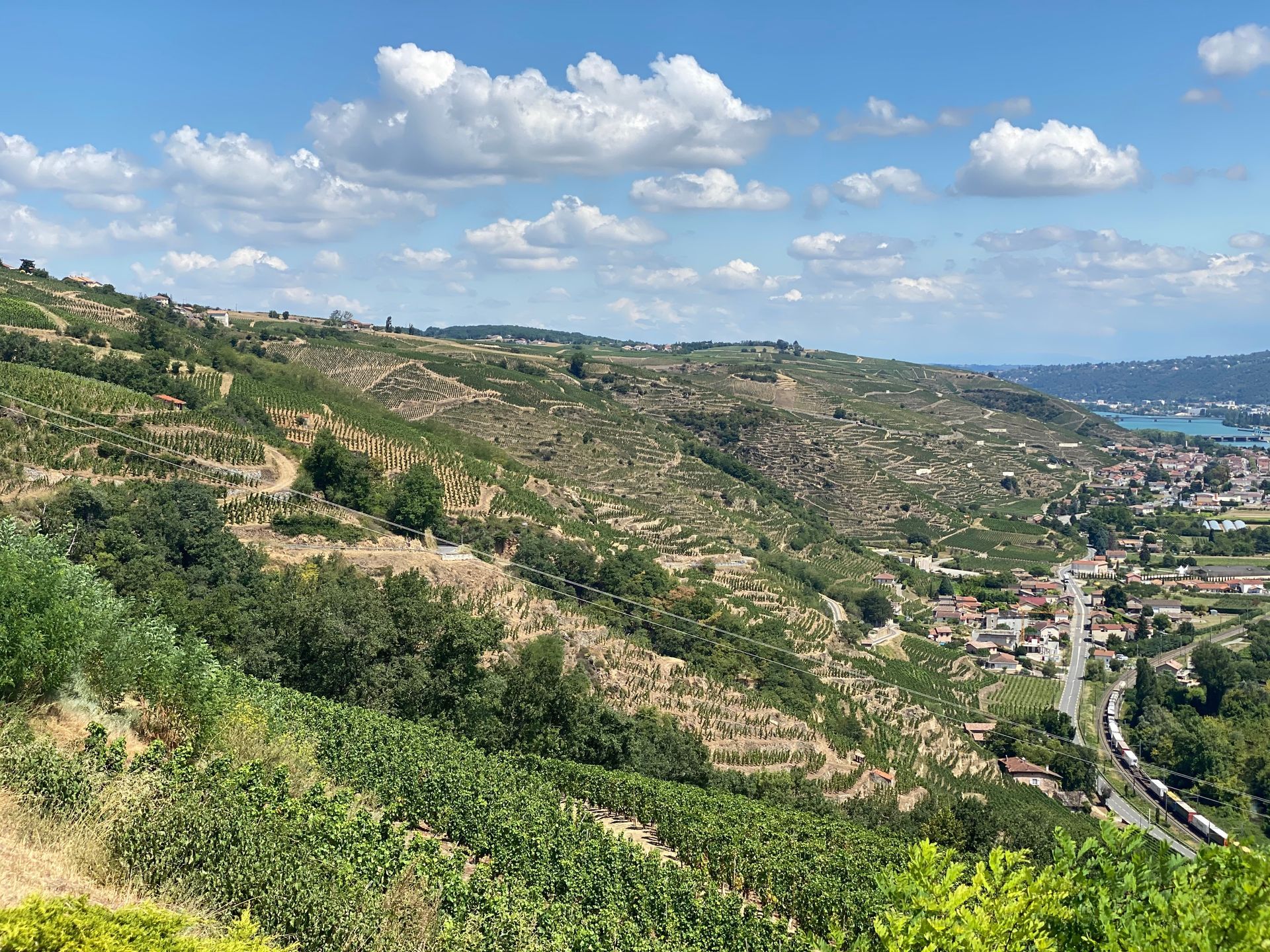 Terroir Is Not a Guarantee of Quality. It Is a Human Responsibility23 hours ago ... I was an actor in this commercial system of volume purchasing and price pressure and, in that economic sense, complicit in it. My agricultural roots ...jolliegroup.com
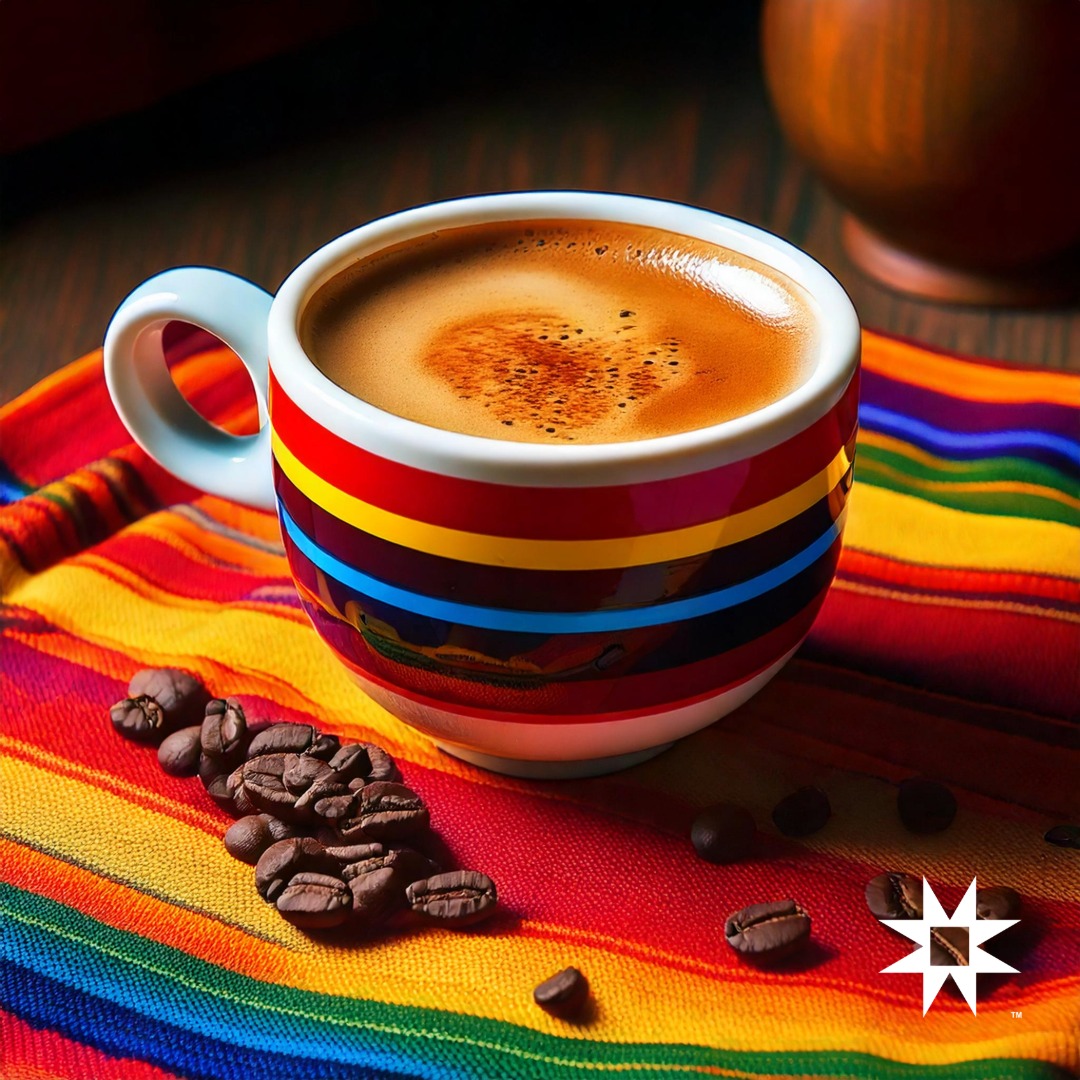 Peru Horseback Ridge Estate SL-09 coffee release - Facebook14 hours ago ... #PeruvianCoffee #Terroir #SpecialtyCoffee #ShadeGrown #AndesMountains #CoffeeOrigins #SunriseTrading #TasteTheRainforest · No photo description ...facebook.com
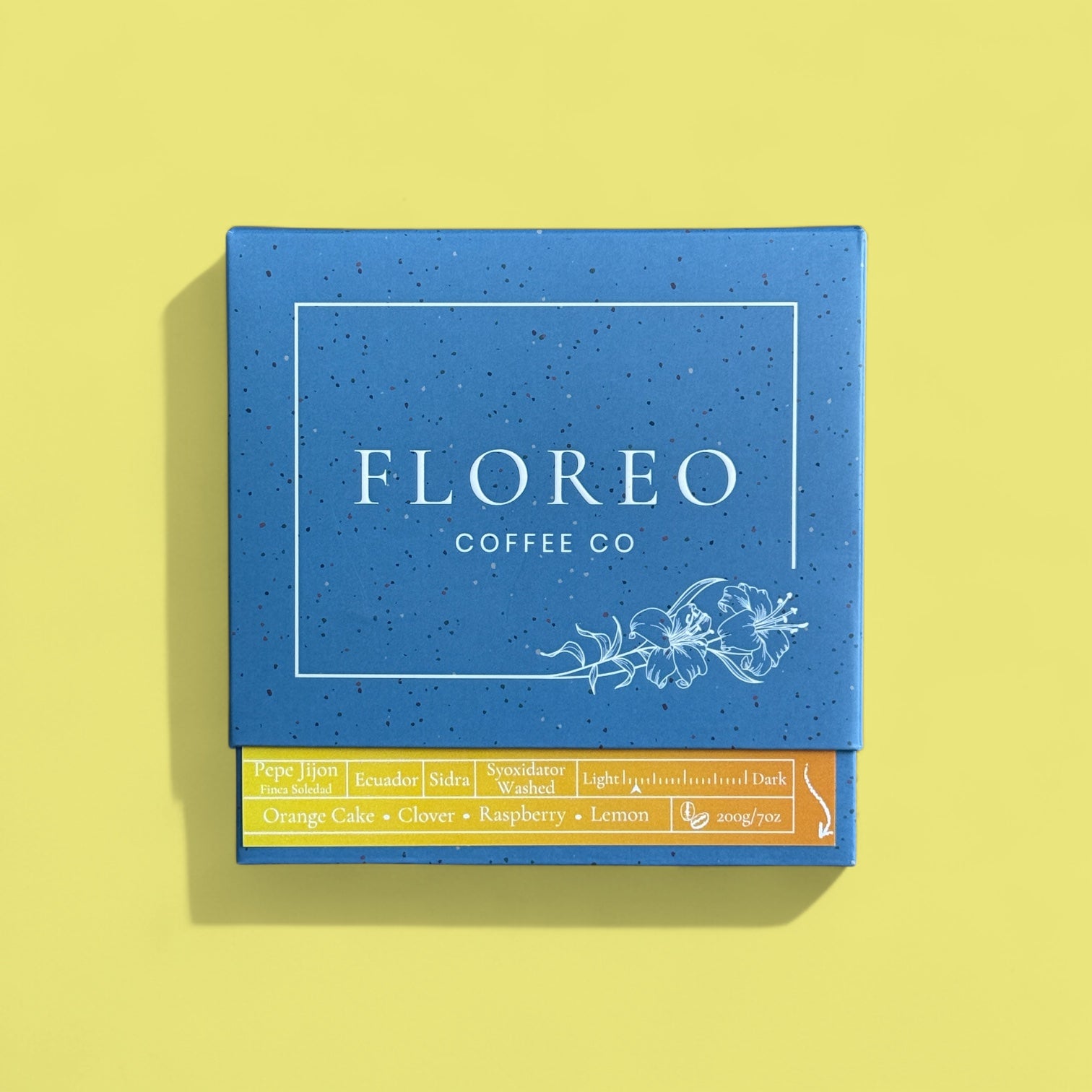 Diego Bermudez - Overripe Double Anaerobic + Yeast & Thermal ...24 hours ago ... Farm Direct Sourcing · Follow On Instagram @Floreo.Coffee ... Deigo Bermudez & Finca El Paraíso in Cacua Colombia is a specialty coffee ...floreocoffee.com
One click creates your own editable copy — change the prompt, the delivery time, everything.
Browse all editions →You could get this general version into your inbox right now — and then fine-tune it to your very specific needs. Here's how to do it:
Step by step: from zero to your first edition
The whole setup takes about two minutes. And every screenshot below comes straight from the real product — nothing is mocked up.
Step 1 Open morningmail.ai
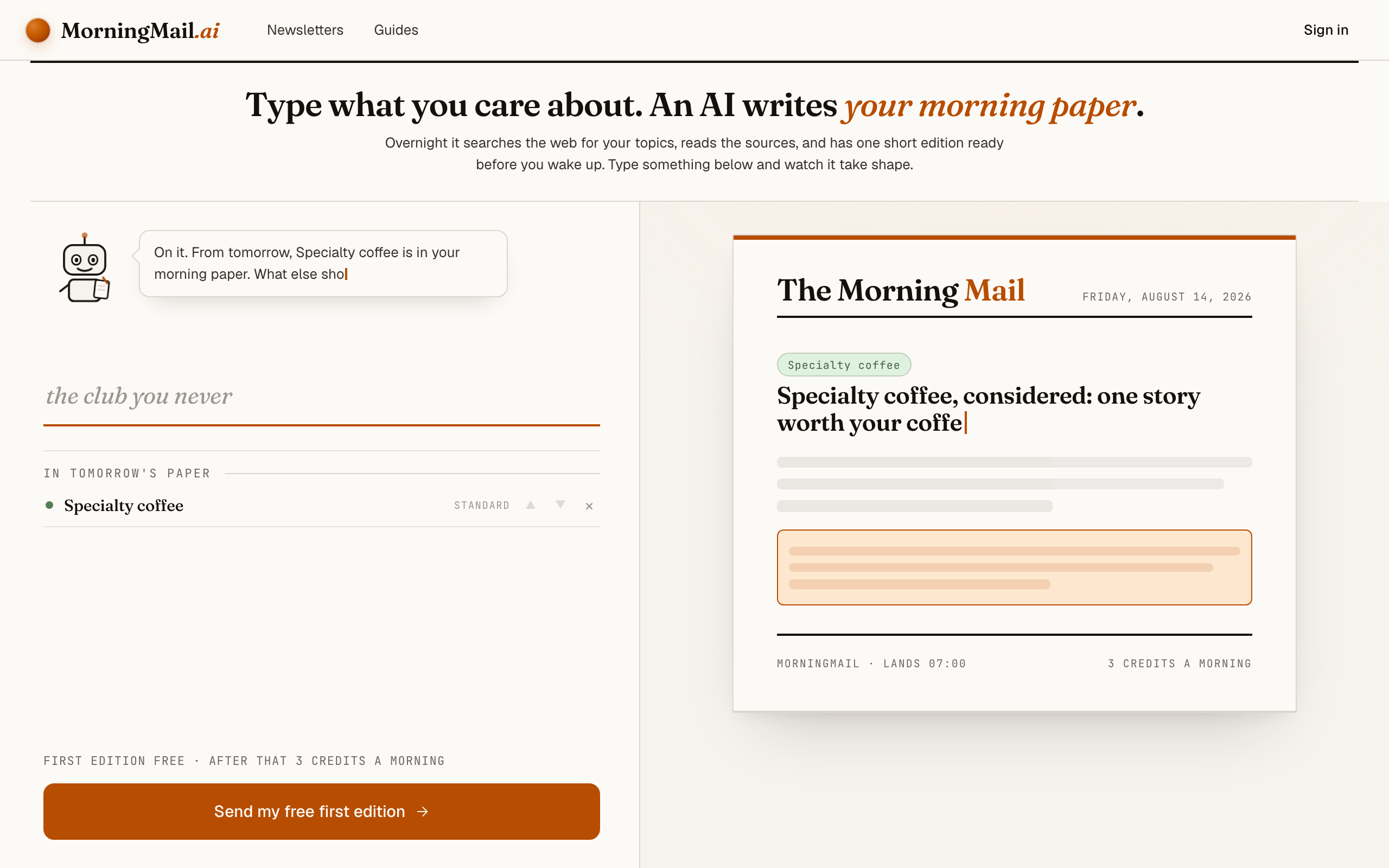
No account yet, nothing to install — the landing page IS where you compose. A friendly press robot introduces itself above one big input, and the paper you're about to fill sits waiting on the right.
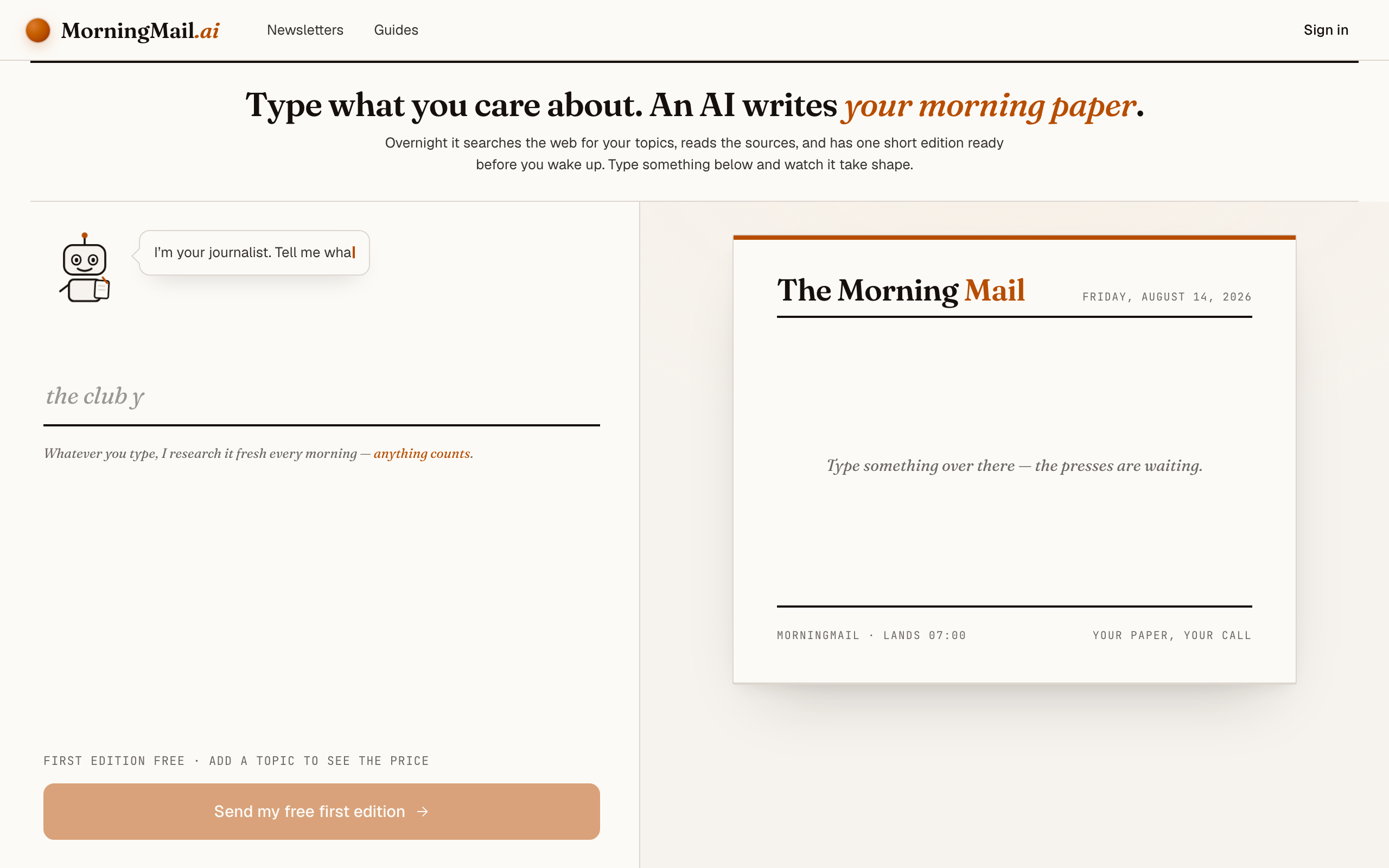
Step 2 Type your topic: Specialty coffee
Type Specialty coffee into that one input. There is nothing to pick and no form to fill — as you type, a draft section forms on the paper beside you, carrying your topic in a tinted badge and the quiet prompt "↵ Enter adds it".
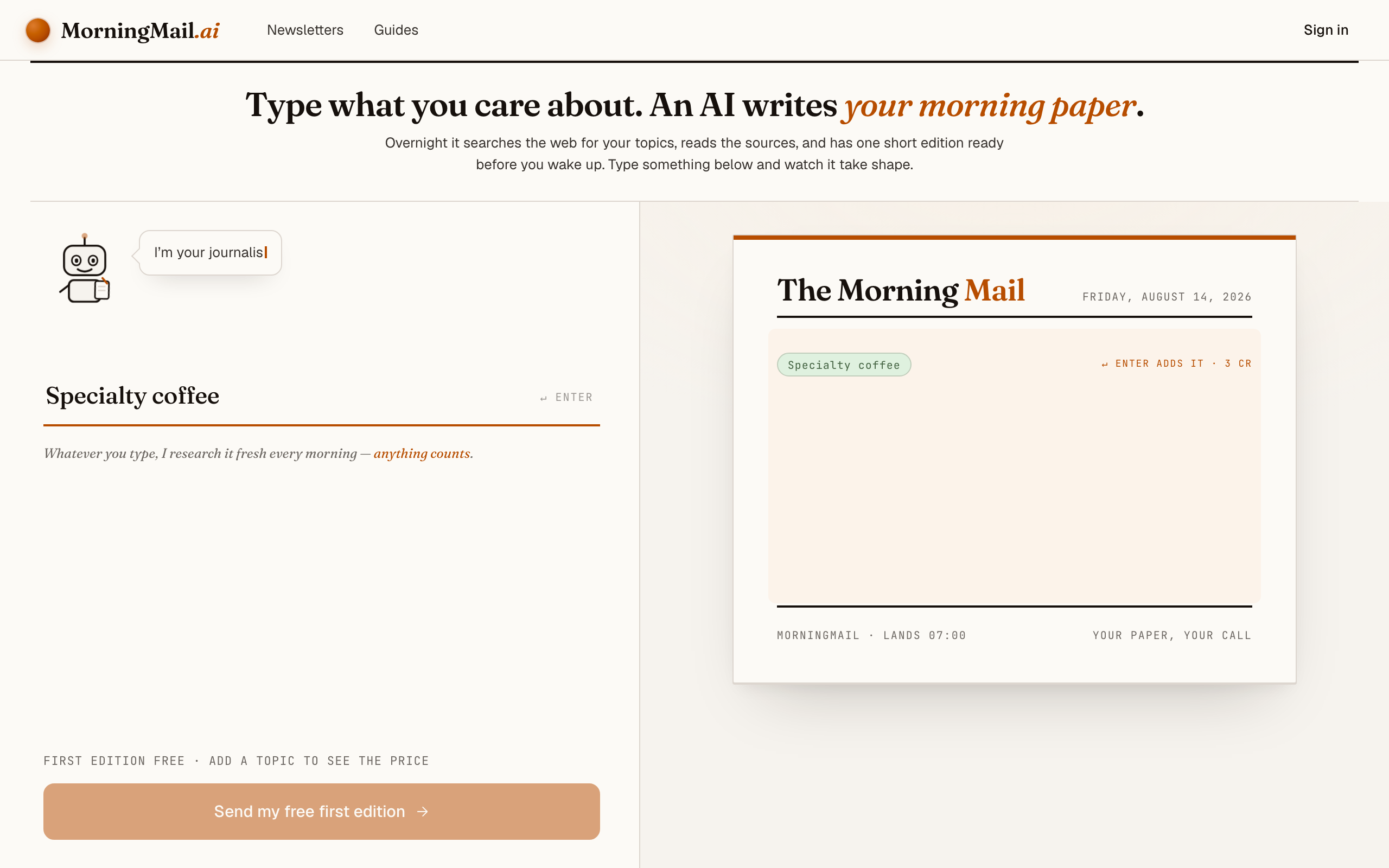
Step 3 Press Enter — and read what the agent was told
Type Specialty coffee into the one big input on the landing page and press Enter—that's the setup. No account first, nothing to browse: the section appears on the paper beside you with a headline and an Assignment already written for it, so there's no mystery about what the agent will be asked tomorrow at dawn. You're never handed an empty prompt box.
The Assignment deliberately asks for one great thing a day—a story about craft, gear or people you'd actually retell over a flat white—because that restraint is what keeps a daily email delightful. It's yours to sharpen: click it and write over it, or tap "+ skip the hype" to keep the marketing out. Mine ended up as "lean towards brewing science and roaster stories over product marketing; once a week, one technique I can try with my V60."
The exact prompt your section starts withSomething genuinely worth knowing about Specialty coffee today — one development, why it matters and where the detail lives. Substance over volume.
Step 4 Send your free first edition
Happy with the paper? Hit "Send my free first edition". The sign-up appears right there — the paper never leaves the screen — and asks the only thing it still needs: where to send it. Email and password, or Google. No card, and the first edition is free.
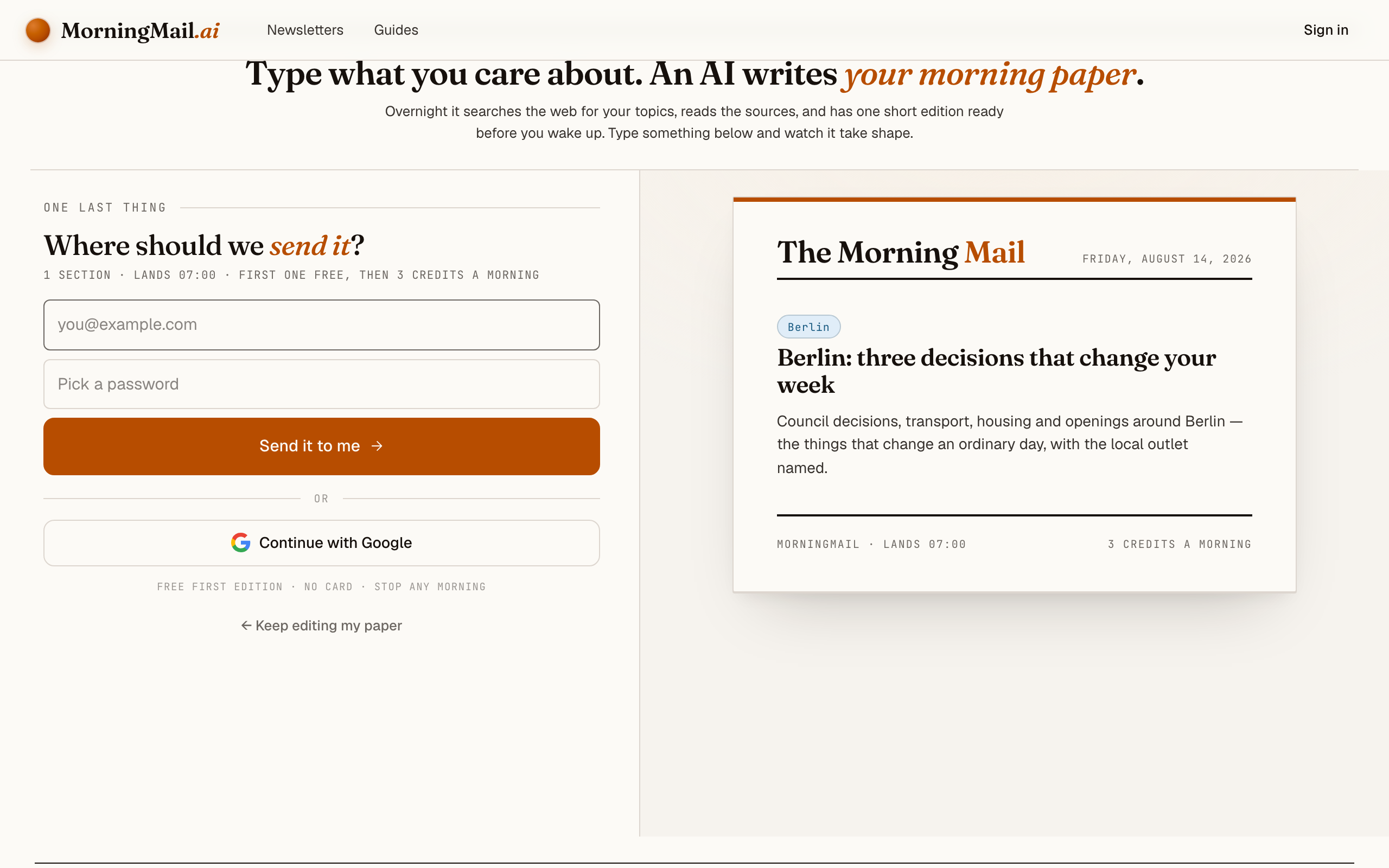
Step 5 Watch it being written
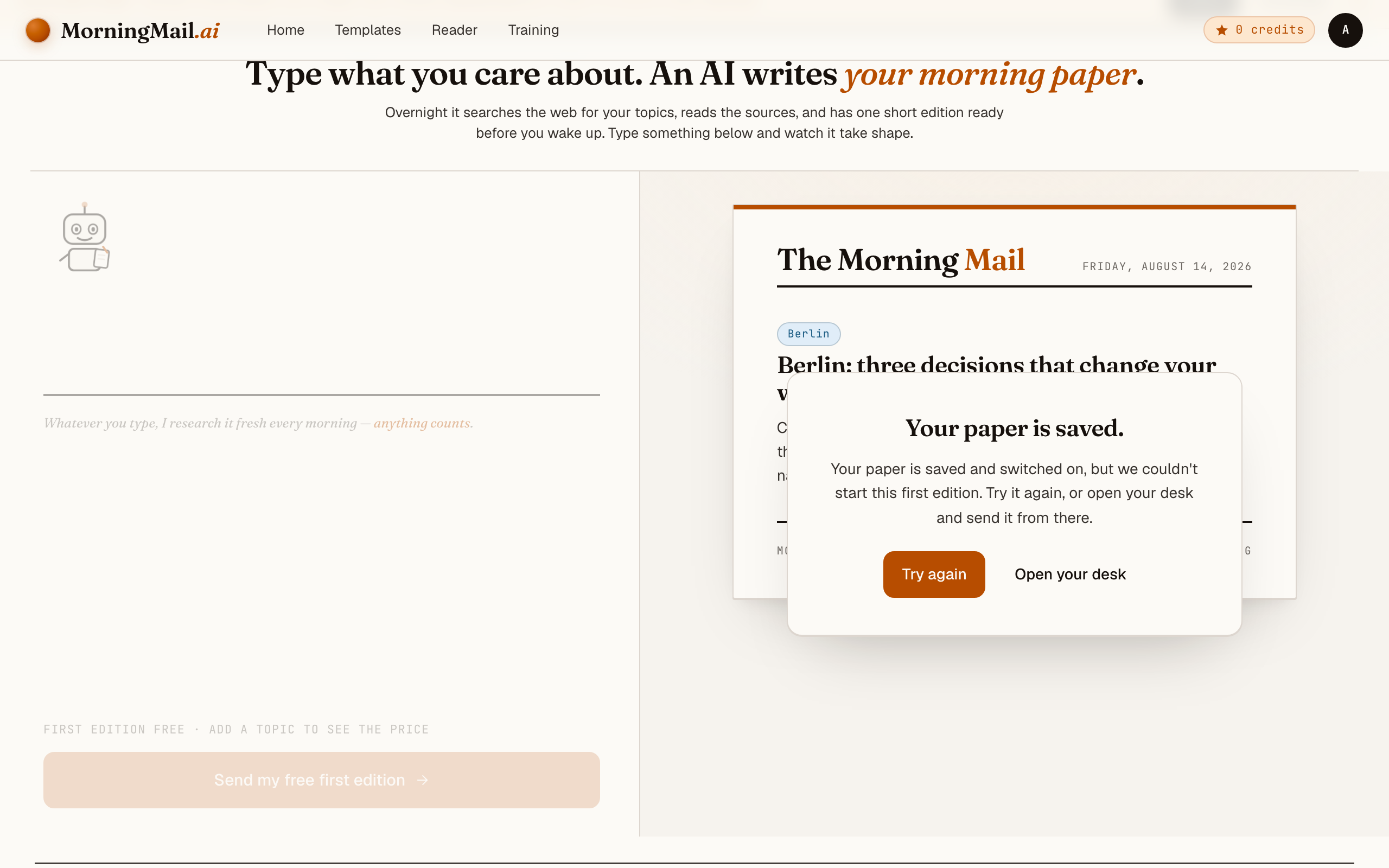
Now the desk goes to work in front of you: working out what to look for, searching the web, reading the best sources, writing your section, composing a subject line, handing it to the post. A minute or two later: "It's in your inbox."
Step 6 Afterwards: the time, the days, the readers
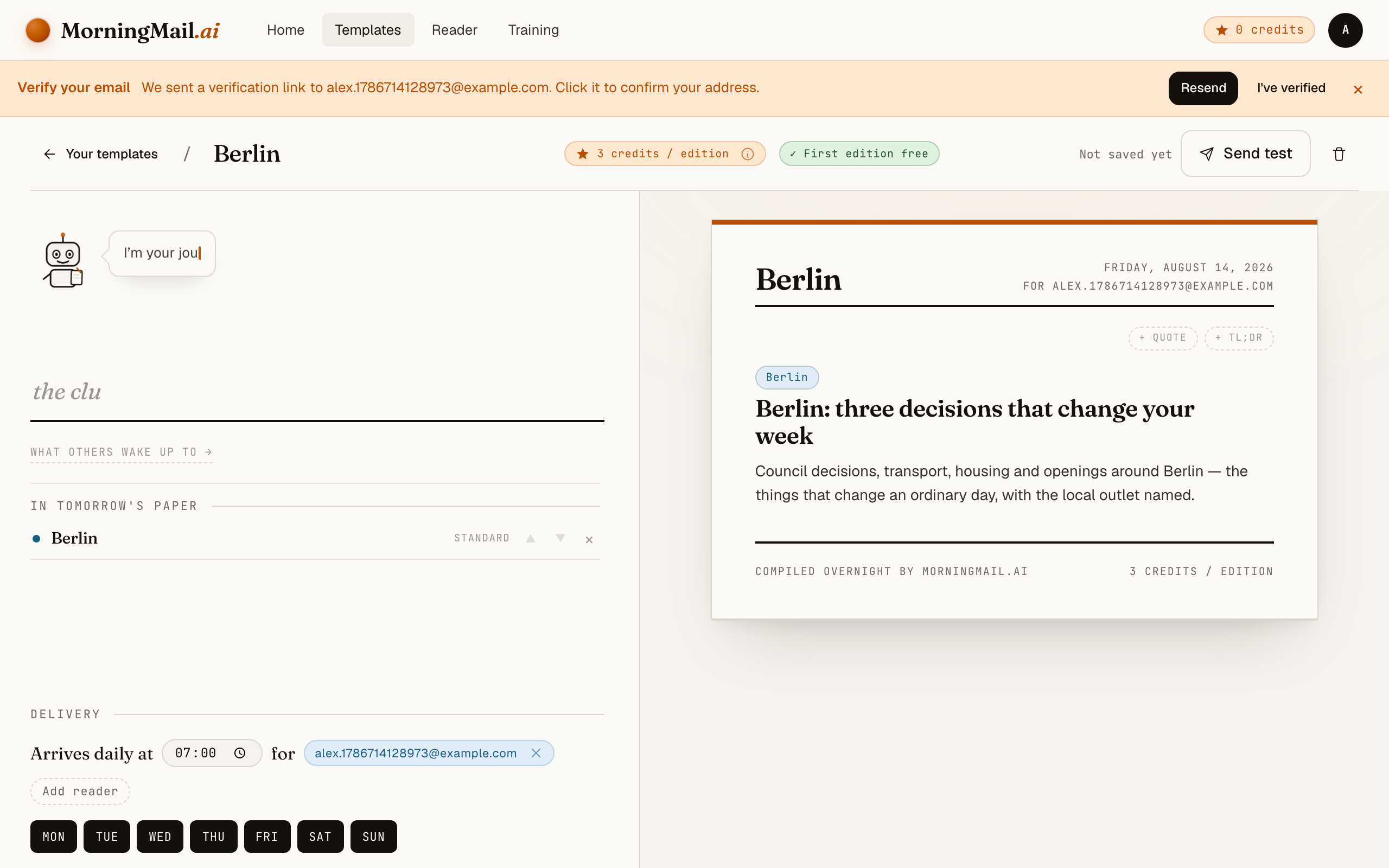
Everything else lives in the builder, once you have a paper to tune. Set the delivery time (07:00 by default) and which weekdays it runs, add readers — up to 100 — and add more topics the same way you added the first: by typing. Nothing here needs deciding on day one.
Get more out of your brief
- Tell it what's on your counter
- One sentence of standing context—"I brew filter on a V60, no espresso machine"—quietly filters every future edition. Machine news you'll never use disappears; recipes you can actually brew show up instead.
- Balance stories and science explicitly
- Specialty coffee has two great pleasures: the people and the physics. If you want both, say so—"alternate roaster and origin stories with brewing research" gives the brief a rhythm instead of leaving the mix to chance.
- Ride the competition season
- The World Barista Championship and SCA events cluster in a few months of the year. Add "during major competitions, lead with results and standout routines" and the brief becomes event coverage exactly when there's something to cover.
- A weekly deep-dive may beat a daily drip
- Delivery weekdays are one tap on the weekday chips, so a Saturday-morning coffee read is easy. I know brewers who keep a short daily note plus a longer weekend edition as a second section with its own length setting.
- Build the whole morning ritual into one email
- Type a second topic for everything that isn't coffee, add a quote for while the kettle heats, or a TL;DR up top. Each section keeps its own tone and Depth, so the coffee part stays the treat.
Good sources to anchor your brief on
The agent searches the open web every morning and cites where it read things. These are the sources I'd point it at in your prompt:
- Sprudge — The long-running coffee culture publication — roaster news, café openings, competition coverage and the industry's gossip, served with personality.
- Perfect Daily Grind — Deep, sober coverage across the whole chain, from producing countries to brew bars. Strong on market context behind the drops and releases.
- James Hoffmann — The reference voice of home brewing — rigorous gear reviews, technique experiments and gentle myth-busting that shapes what enthusiasts try next.
- Barista Magazine — The trade magazine for café professionals — competition reporting, barista profiles and industry trends before they reach consumer media.
- Specialty Coffee Association (SCA) — The institution behind the standards, the events and much of the research — primary source for competition rules, results and published science.
- Barista Hustle — Where brewing science gets practical: extraction theory, water chemistry and technique courses that trickle down into every serious home setup.
Frequently asked questions
- How much does a daily coffee brief cost?
- Your first edition is free—no credit card required. After that, each send costs a few credits per section depending on the AI model tier it runs on, and credits never expire. A single-section coffee brief stays cheap even daily.
- I already follow coffee YouTube and Instagram. What does this add?
- Feeds show you what performs, whenever you happen to open the app. A brief inverts that: one written email, at your chosen time, answering your standing question—sources linked. You stop mining your feed for the good stuff; the good stuff arrives brewed.
- Can it follow specific roasters or my local scene?
- Yes—name them in the prompt. "Watch for new releases from my three favourite roasters, plus anything notable in the Berlin café scene" is a perfectly good instruction. The agent searches fresh every morning, so it works from whatever is public that day.
- Will it keep track of competitions like the World Barista Championship?
- If you ask it to. Competitions are public, well-covered events—tell the brief to prioritise results and memorable routines during championship season, and you get the morning-after summary without watching the livestream.
- Can I get the brief in German?
- Yes—write your prompt in German and the brief arrives in German; it's always written in the language of your instructions. The MorningMail interface is available in English and German too.
Your inbox, your editor
Build your own AI-written brief in two minutes. The first edition is on me — no credit card required.
Build your brief — freeI am always happy to answer questions and I'm open to feedback. Feel free to reach out at any time: marius@morningmail.ai