Agentic Coding
Top tech stories today across software, hardware, AI, and product launches. Senior engineer audience — skip rumour churn and pre-announcement leaks. Lead with shipping-now stories and what changed for builders.
← See today's latestSupervisor pattern decoded, Addy Osmani ships 24 skills, Agent Fleet goes multi-model
Supervisor Pattern Explained
There's a reason Claude Code defaults to lead-agent-with-subagents.
A new breakdown explains why the supervisor pattern won in coding before enterprise AI caught on—code either compiles or it doesn't, giving you the fastest possible feedback loop for spotting architectural failures [Source: AI Skill Market]. The practical insight: Claude Code's fork primitive inherits full context for investigations building on prior work, while spawn-fresh creates unbiased reviewers who weren't involved in implementation. Klarna and Cisco are now adopting this same hierarchy for workflow automation.
If you're building multi-agent setups outside dev tools, manufacture faster feedback loops through synthetic testing—don't wait for production failures.
Addy Osmani's Agent Skills
Google's Addy Osmani just open-sourced 24 production-grade skills for your agent stack.
The framework maps your entire dev lifecycle through slash commands—/spec, /plan, /build, /test, /review, /ship—with each skill including anti-rationalization tables that counter the shortcuts agents love to take [Source: GitHub]. It embeds Google engineering culture directly: Hyrum's Law for API design, the Beyoncé Rule for testing, Chesterton's Fence before you simplify code. The /build command removes manual handoffs entirely—approve the plan once, then it runs autonomously while enforcing test-driven commits.
Works with Claude Code, Cursor, Gemini CLI, Windsurf, and GitHub Copilot—install via npx or native plugin.
Agent Fleet Multi-Model Setup
You can now run Claude, ChatGPT, Copilot, and local models in the same agent fleet.
Agent Fleet ships with 29 lifecycle skills and 15 specialist personas—planner, builder, test-engineer, code-reviewer, documenter—all communicating over a shared messaging plane [Source: Pi.dev]. The dispatcher keeps research output on disk rather than flooding your orchestrator's context window. Claude Code appears as a first-class peer for cross-model review, meaning your Cursor session can ask Claude Code questions mid-task. Tiled workspaces let you snapshot and resume entire fleet states.
If you've been running separate model subscriptions, this finally lets them talk to each other.
Amp Code's Background Agents
Your agent can keep working after you close your laptop.
Amp Code introduces orbs—remote machines where agents run unsupervised with your code, plugins, and tools pre-loaded [Source: Amp Code]. Each thread spawns a fresh orb, eliminating workspace conflicts and port collisions. Recent updates add multi-repo support, MCP server integration, and friendly URLs for sharing orbs. You manage everything from web, terminal, or mobile—spawn multiple agents for parallel tasks ranging from quick fixes to full features.
Worth trying if your agent work keeps blocking on needing your machine awake.
 The Supervisor Pattern: Claude Code's Default for a Reason8 hours ago ... Part of the "The Subagent Economy" series on aiskill.market. claude-code. agent-architecture. developer-tools. orchestration. multi-agent-systems ...aiskill.market
 addyosmani/agent-skills: Production-grade engineering ... - GitHub7 hours ago ... Endorsed multi-persona orchestration ... Production-grade engineering skills for AI coding agents. skills.addy.ie. Topics. agent-skillsantigravityclaude-codecodex ...github.com
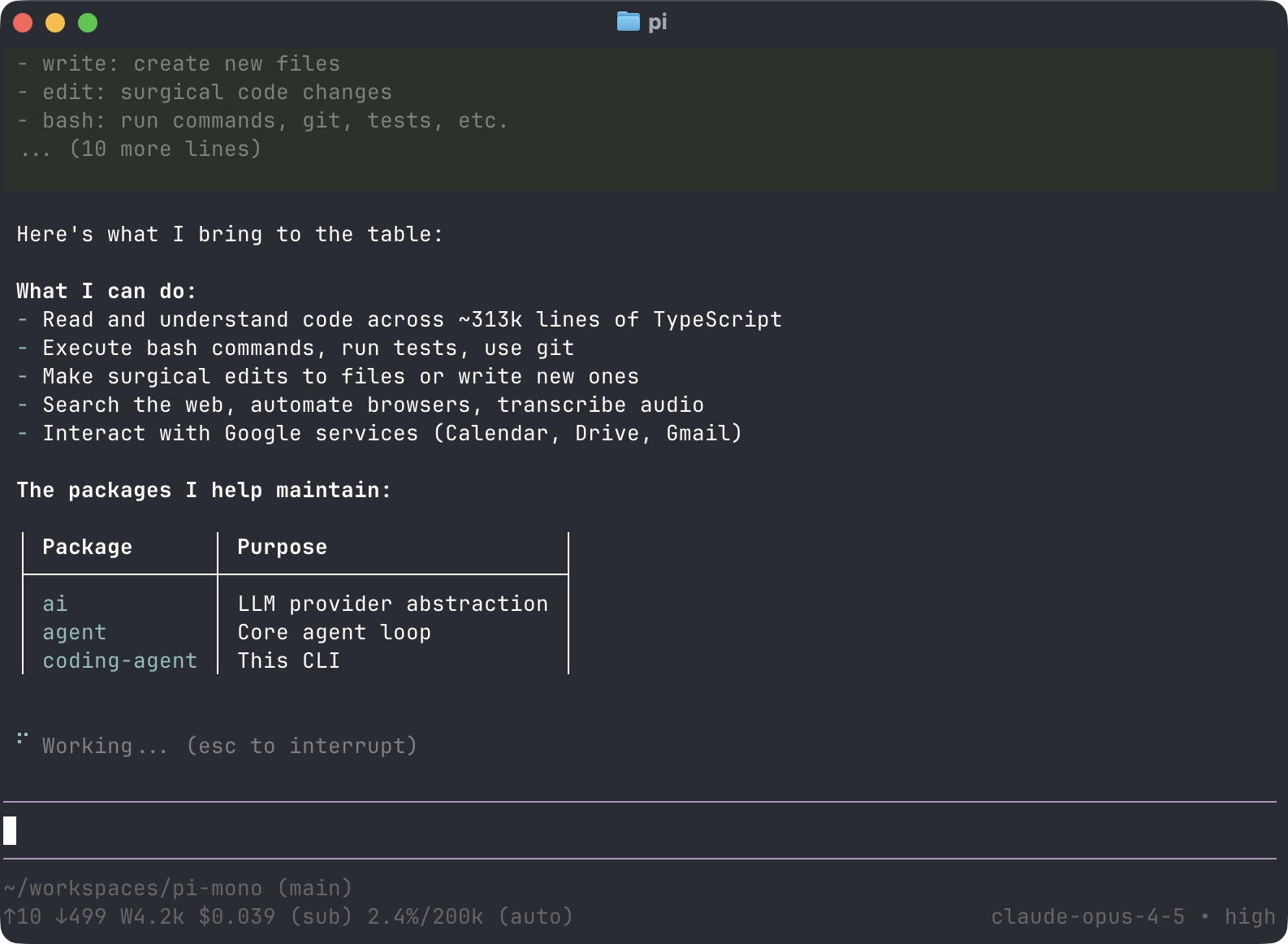 @chankov/agent-fleet · Packages · Pi24 hours ago ... Agent Fleet is a multi-agent orchestration system for AI coding agents ... Peer data plane — bidirectional messaging between agents (including Claude Code panes).pi.dev
 Amp Code9 hours ago ... the @AmpCode folks have cooked. Making new orbs is so easy and really unlocks a lot of the multi-agent behaviors that had just a tad too much friction before.”.ampcode.com